Recreational vs. edible bones — and why size matters more than type
Marrow, knuckle, neck, wing. Which do the teeth work, which get eaten, and how to pick one bigger than the mouth.
By the owners, Animal House of Distinction · Jupiter, FL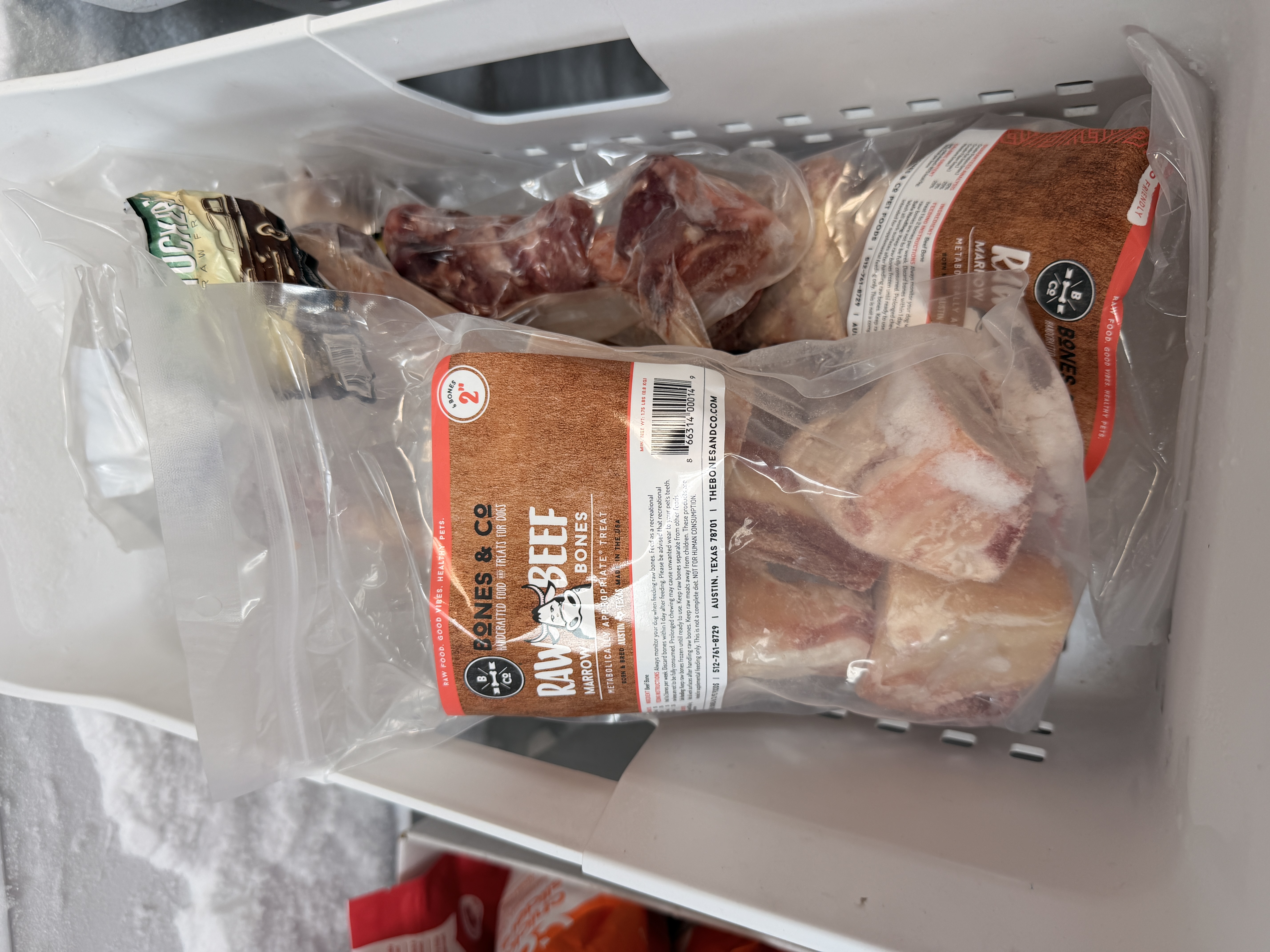
Two jobs, two kinds of bone
Edible bones are soft enough to be crunched and swallowed — chicken necks, wings and backs, turkey necks, duck feet, rabbit. They are food. In a complete raw diet they are ground in, providing calcium and phosphorus in the ratio the body expects. Fed whole, they clean teeth on the way down.
Recreational bones are the ones a dog works on for an hour and does not finish — beef marrow bones, knuckles, femur ends. They are not food. They are dental care and a very good afternoon. The dog strips the meat and cartilage, gnaws the ends, and the scraping is what removes plaque.
Raw, never cooked
Every horror story about bones — the splinters, the perforations — comes from cooked bone. Heat drives out moisture and collagen and leaves something brittle that shatters into shards. Raw bone is flexible, digestible and the calcium source these animals evolved on.
That includes smoked and baked "dog bones" sold in pet aisles. If it has been heated, it goes in the trash, not the dog.
Size beats type
The one rule that prevents most problems: the bone should be bigger than the dog's mouth. A bone that fits fully inside can be gulped or wedged across the palate. A bone that is too big to swallow can only be gnawed.
For a 15 lb dog that means a chicken neck is fine as an edible, but a marrow bone should be a 2-inch cut, not a 1-inch. For a 90 lb dog, whole turkey necks, and knuckle bones the size of a fist. We size these in the store; bring the dog or tell us the weight.
A few cautions worth knowing
Weight-bearing bones from large animals — beef femur shafts — are extremely hard. Aggressive chewers can crack a tooth on them. For those dogs, knuckles and softer marrow bones, and take the bone away when it is down to a clean, dry ring.
Supervise. Always. Not because bones are dangerous, but because any dog with any object can get into trouble unsupervised. Feed bones on a towel or outside, frozen or thawed, and refrigerate leftovers for a day at most.
Too much bone shows up as hard, chalky, white stool and straining. Back off the recreational bones for a few days and it resolves.